
Art & Craft Heritage5 min read
The Architecture of Attention.
From Indian temples and Santiniketan to modern maker studios, the spaces around us can shape how we focus, think and create. Perhaps attention isn't just something we practise — it is something we design.
Long before psychologists began studying focus, Indian philosophy had a word for it: Ekagrata. Often translated as "one-pointed attention," Ekagrata refers to the ability to direct the mind toward a single object without being constantly pulled elsewhere. It is not multitasking, efficiency, or hustle. It is attention in its purest and most uninterrupted form.

What is fascinating is that Indian traditions didn't treat attention as merely a mental skill. They treated it as something that could be shaped by the environment. In other words, attention had architecture.
Take India's temples. At first glance, they appear to be religious structures, but many architectural scholars have argued that traditional temple design also functions as a journey of attention. You begin in the noise of everyday life and then pass through gateways, courtyards, corridors, and thresholds. With each transition, distractions gradually fall away. The space narrows, and so does the mind, until finally, all attention converges on a single focal point.
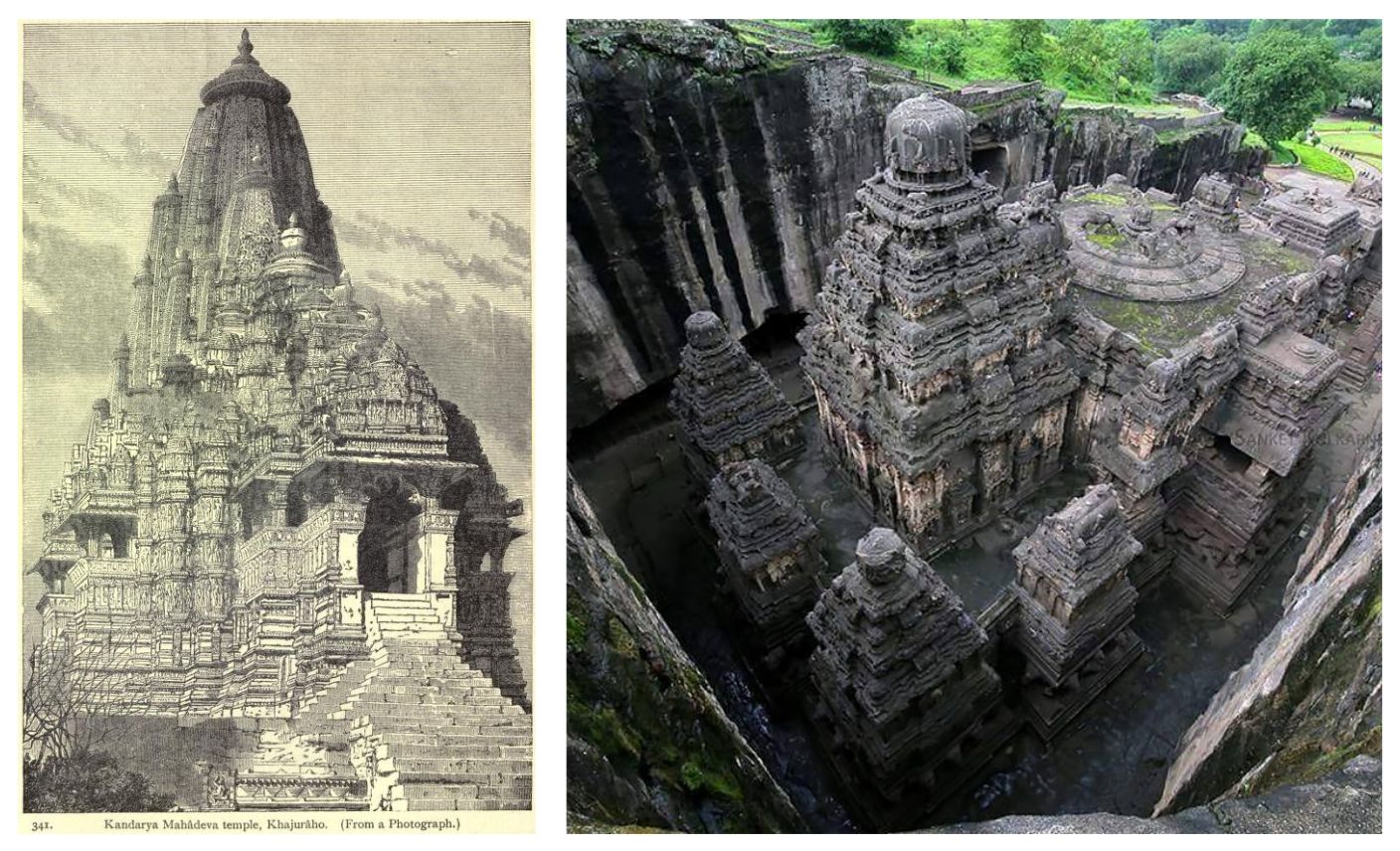
Long before neuroscience, Indian architects were designing environments that guided attention toward stillness. In some ways, it is not unlike what today's meditation apps are trying to achieve through software.
Rabindranath Tagore arrived at a similar insight centuries later. When he founded Santiniketan, he rejected the idea that creativity flourishes inside rigid classrooms. Instead, he built a school where students learned under trees, surrounded by nature, open skies, natural light, art, music, and conversation. Decades before environmental psychologists began studying cognitive restoration, Tagore seemed to intuit something profound: the environment shapes the quality of thought.

Modern science is beginning to catch up. Environmental psychologists Rachel and Stephen Kaplan, creators of Attention Restoration Theory, found that certain environments can help restore our capacity to focus. These are not environments packed with stimulation, but spaces containing natural elements, visual coherence, gentle fascination, and room to think.
Sound familiar? Many traditional maker studios already embody these principles. A courtyard filled with morning light, a weaving workshop overlooking fields, or a pottery studio open to the breeze may seem beautiful simply because of their surroundings. Perhaps, however, these spaces are also cognitive tools.
Then there is Riyaz, the daily practice of Indian classical musicians. To an outsider, it can seem repetitive: the same phrase, the same note, again and again. Yet generations of musicians have treated this repetition not as monotony, but as a pathway to mastery. The goal is not simply technical improvement. It is complete immersion, a state where attention becomes so refined that everything else begins to disappear. Psychologists today might call this Flow State. Indian musicians have been cultivating something remarkably similar for centuries.

Philosopher Jiddu Krishnamurti offered perhaps the most intriguing perspective of all. He argued that attention and concentration are not the same thing. Concentration, he suggested, requires effort, while attention arises from interest. A child watching a butterfly does not need discipline to focus. A craftsperson shaping clay does not need a reminder to be present. The activity itself commands attention.
This may explain why master makers don't necessarily spend their lives fighting distractions. Instead, they create environments where attention can emerge naturally.
And perhaps that is why artists care so much about their studios.
A software engineer can work almost anywhere. A laptop, a desk, or even a café. But walk into the studio of a ceramic artist, painter, architect, or sculptor and you'll notice something curious. Artists can be remarkably particular about their surroundings: the direction of light, the height of the ceiling, the sound of the room, and the placement of a worktable. Sometimes, they seem almost as concerned with the space as they are with the work itself.
Which raises an interesting question: What if creativity doesn't just happen inside the mind? What if it also happens inside the room?
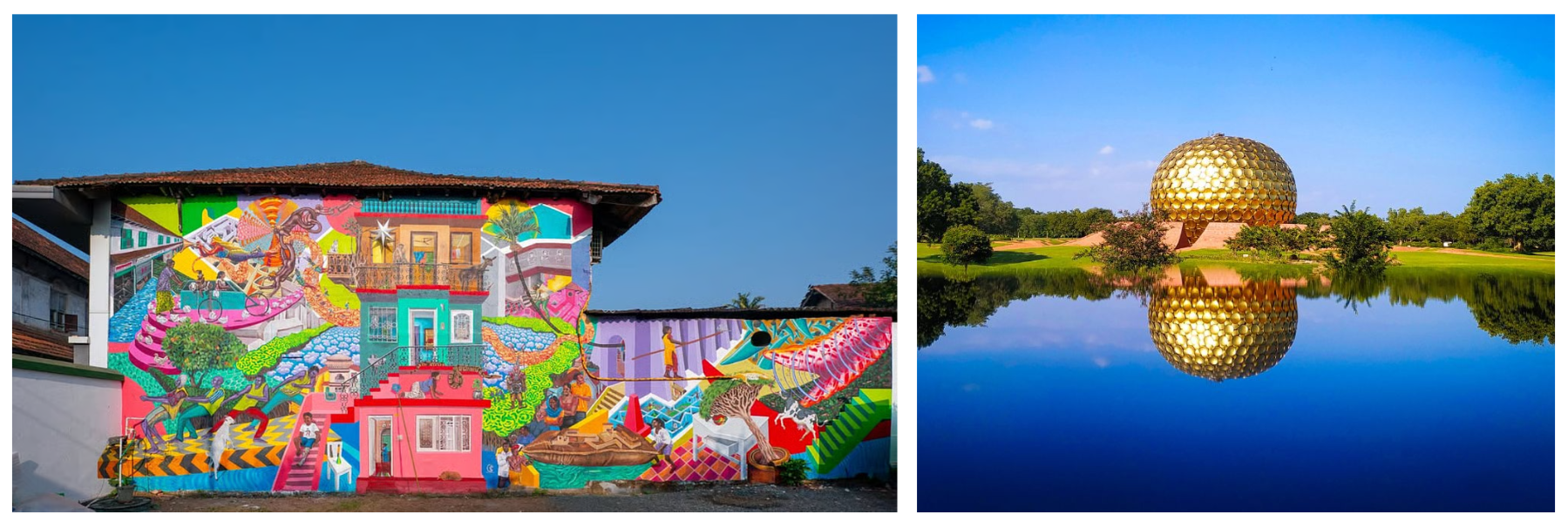
In Auroville, many ceramic studios are built around open courtyards, natural ventilation, and soft daylight. At the Kochi Biennale, artists often speak about how old warehouses, heritage buildings, and industrial spaces influence the way they think and create. Even newer design campuses like Srishti in Bengaluru have moved away from rigid classrooms in favour of open, exploratory environments.
These choices aren't just aesthetic. They can also shape how people think, focus, and create.
Modern science is beginning to explain why. Researchers at Princeton University found that visual clutter can compete for attention in the brain. The more distractions present in a space, the harder the brain has to work to focus. Suddenly, that clean studio with a single workbench doesn't seem merely minimalist. It seems strategic.

Then there is the problem of interruption. According to researcher Gloria Mark, one of the world's leading experts on attention, frequent interruptions can leave what she calls "attention residue." Part of your mind remains stuck on the previous task, making it harder to fully engage with the next one. It is why a single notification can derail a period of concentration and why many makers fiercely protect their workspaces from distraction.
The most surprising finding comes from architecture itself. Research from the Harvard Healthy Buildings Program suggests that factors such as natural light, fresh air, and environmental quality can influence cognitive performance. In other words, the space you work in doesn't just affect your mood. It can also affect how well you think.
Perhaps that's why the world's best makers spend so much time designing their studios. Not simply because they're chasing aesthetics, but because they're protecting attention. And attention, it turns out, may be the most valuable material they work with.
Modern offices are often designed around communication, meetings, collaboration, and constant connectivity. Studios are designed for something else: focus, presence, deep work, and the ability to stay with a single idea long enough for it to become something meaningful.

This brings us back to the studio: the silence, the light, the rituals, and the uncluttered workbench. What appears simple is often deeply intentional. Great makers seem to understand something that many modern workplaces have forgotten: attention is not merely a mental resource. It is an environmental one.
The quality of our focus is shaped by the quality of the spaces we inhabit. Perhaps that is the real lesson hidden inside India's workshops, temples, gurukuls, and craft traditions. For centuries, they were not simply building places to work. They were building places to pay attention.
Great work doesn't happen by accident. Neither does attention. Both are designed.
Follow HobbyMela on Instagram and Linkedin
Subscribe on https://www.youtube.com/@hobbymela
Read more at hobbymela.com