
Art & Craft Heritage4 min read
The Ancient Indians Had a Word for Focus. It Wasn't Mindfulness.
Long before mindfulness apps, Patanjali described Dharana—the practice of holding attention steadily. Today, making with our hands may offer another path to focus, combining mindfulness, flow, creativity and the deep satisfaction of being fully present.
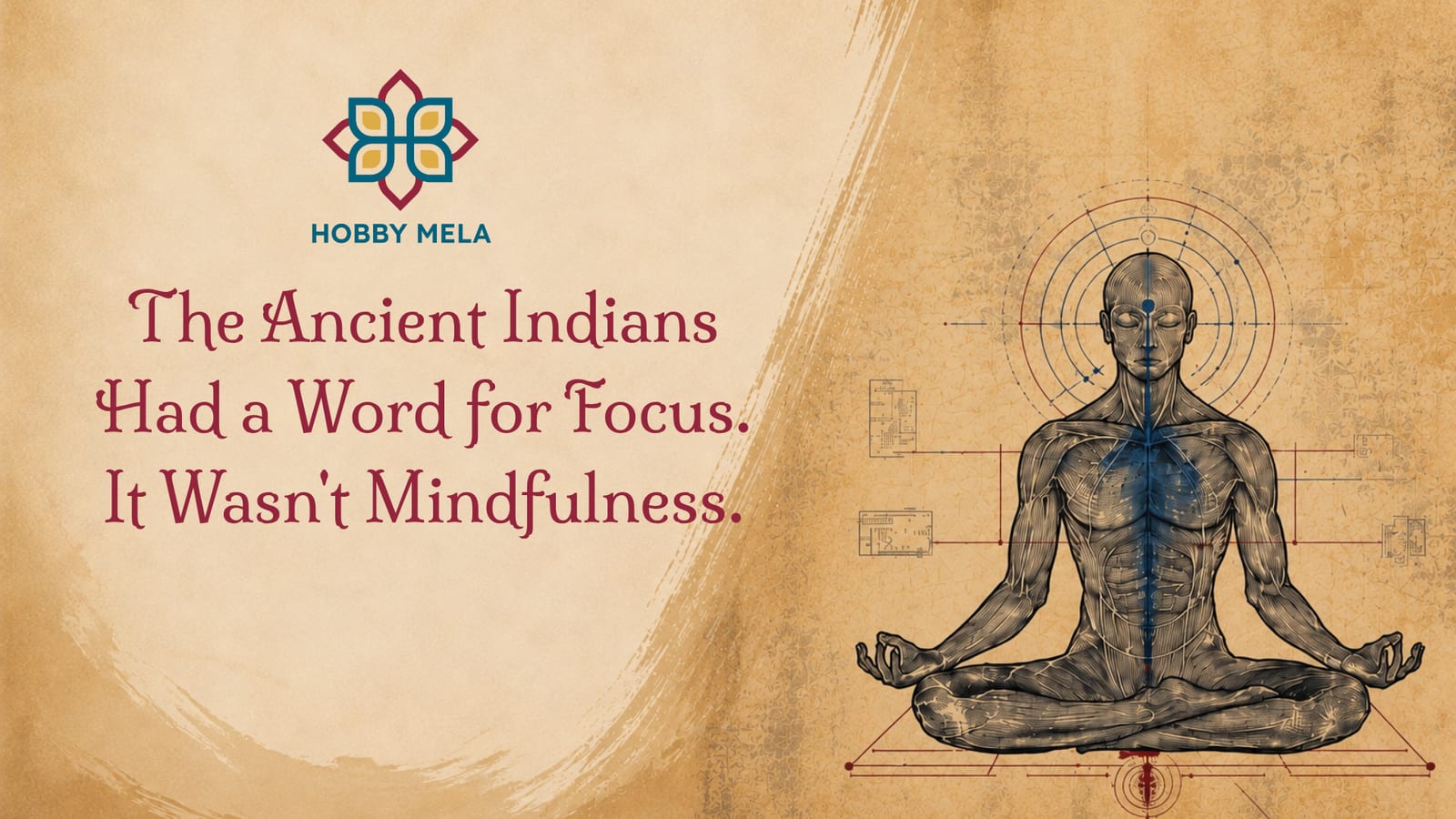
More than 2,000 years before the first meditation app was downloaded, the Indian sage Patanjali described a mental state called Dharana. Dharana is often translated as concentration, but that doesn't quite capture it. It refers to the act of holding your attention steadily on a single object without being pulled away by every passing thought, distraction, or impulse. In many ways, it was considered the doorway to deeper states of awareness.
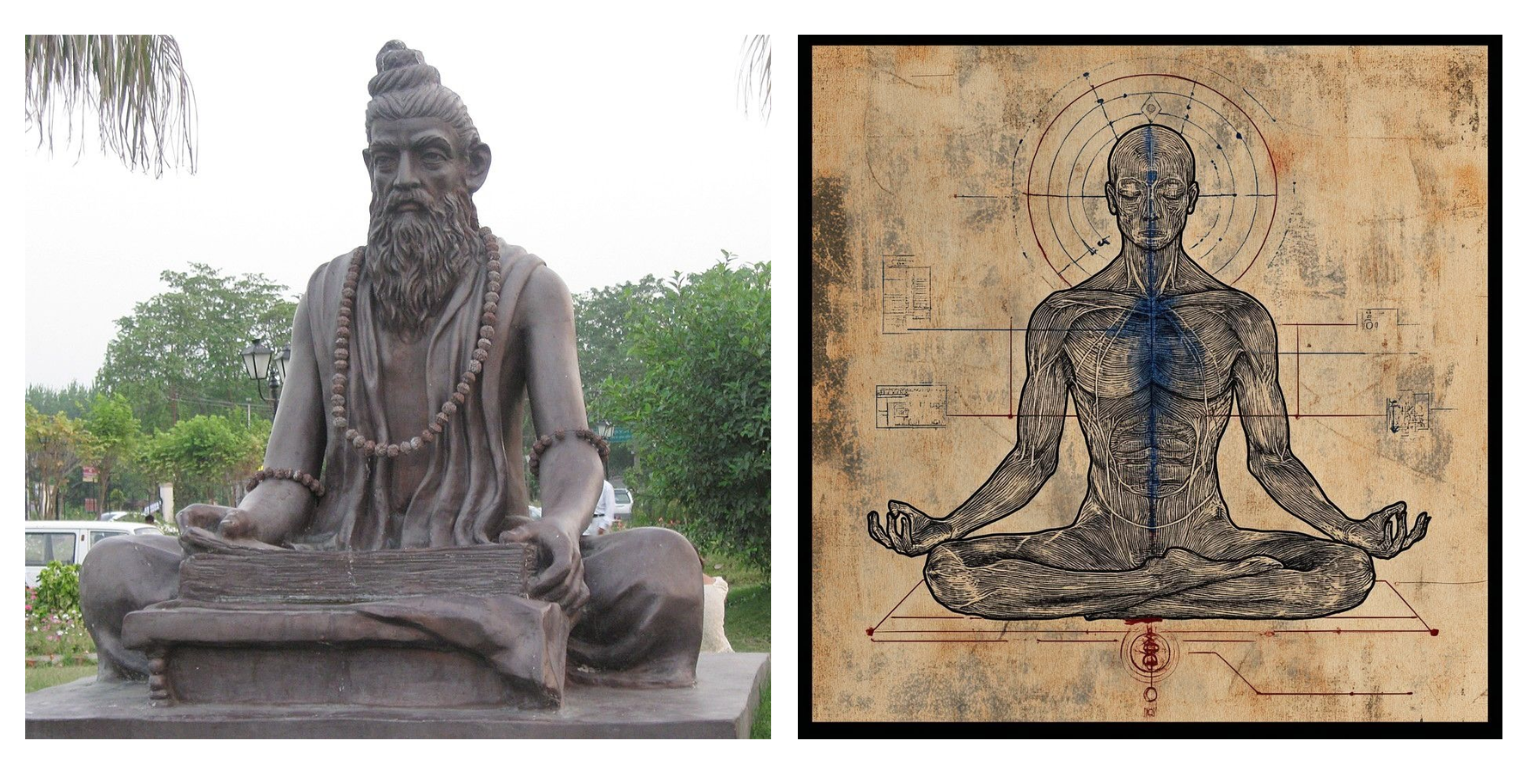
Which is fascinating because Patanjali wasn't writing for a world of smartphones. Yet he seemed to be describing one of the greatest challenges of modern life: How do we keep our attention from constantly wandering?
In 2010, Harvard researchers Matthew Killingsworth and Daniel Gilbert tracked thousands of people throughout their day and made a startling discovery. The average person spends nearly 47% of their waking hours thinking about something other than what they're currently doing. Almost half our lives are spent physically present but mentally elsewhere.
The researchers discovered something even more interesting: the more our minds wandered, the less happy people tended to be. Not necessarily because their thoughts were negative, but simply because they weren't fully engaged with what was happening right now.
For the past decade, mindfulness has emerged as one solution to this problem. The basic idea is beautifully simple: notice where your attention is and gently bring it back—to your breath, your body, or the present moment.
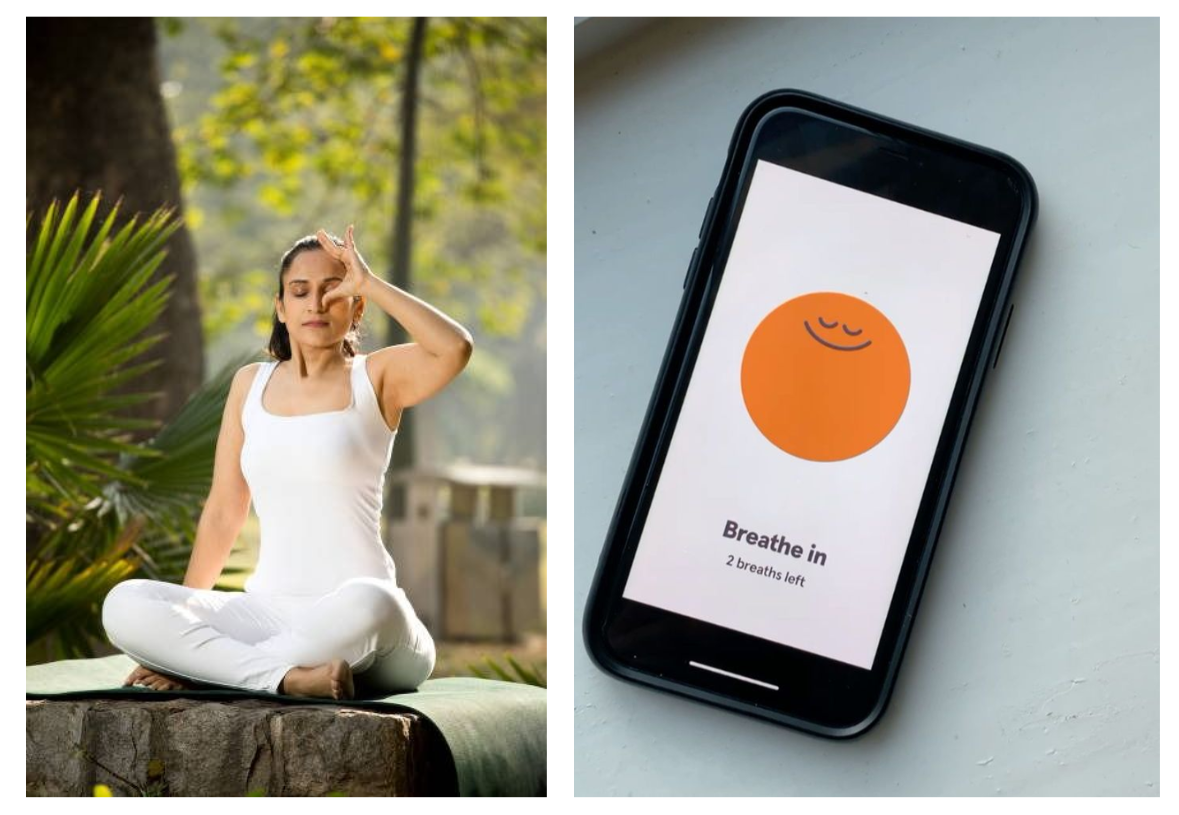
But there is another path to the same destination that receives far less attention.
Making.
Psychologist Ellen Langer, often called the mother of modern mindfulness, spent much of her career challenging conventional assumptions about attention. Her research suggested that mindfulness isn't limited to meditation. At its core, mindfulness is the process of actively noticing: noticing details, noticing change, and noticing what's actually in front of us.

Few activities demand this more naturally than making something with our hands. A potter notices the moisture in clay. A weaver notices tension in thread. A woodworker notices grain patterns. A painter notices light. The material itself keeps calling attention back to the present moment. No reminder required.
This is where another fascinating idea enters the story. Psychologist Mihaly Csikszentmihalyi spent decades studying what he called Flow State—those moments when people become so immersed in an activity that they lose track of time entirely. Hours pass like minutes, self-consciousness fades, and attention locks onto the task.
Flow and mindfulness are often treated as separate concepts, but perhaps they're closer cousins than we think. Mindfulness asks you to notice the present moment. Flow makes the present moment impossible to ignore.
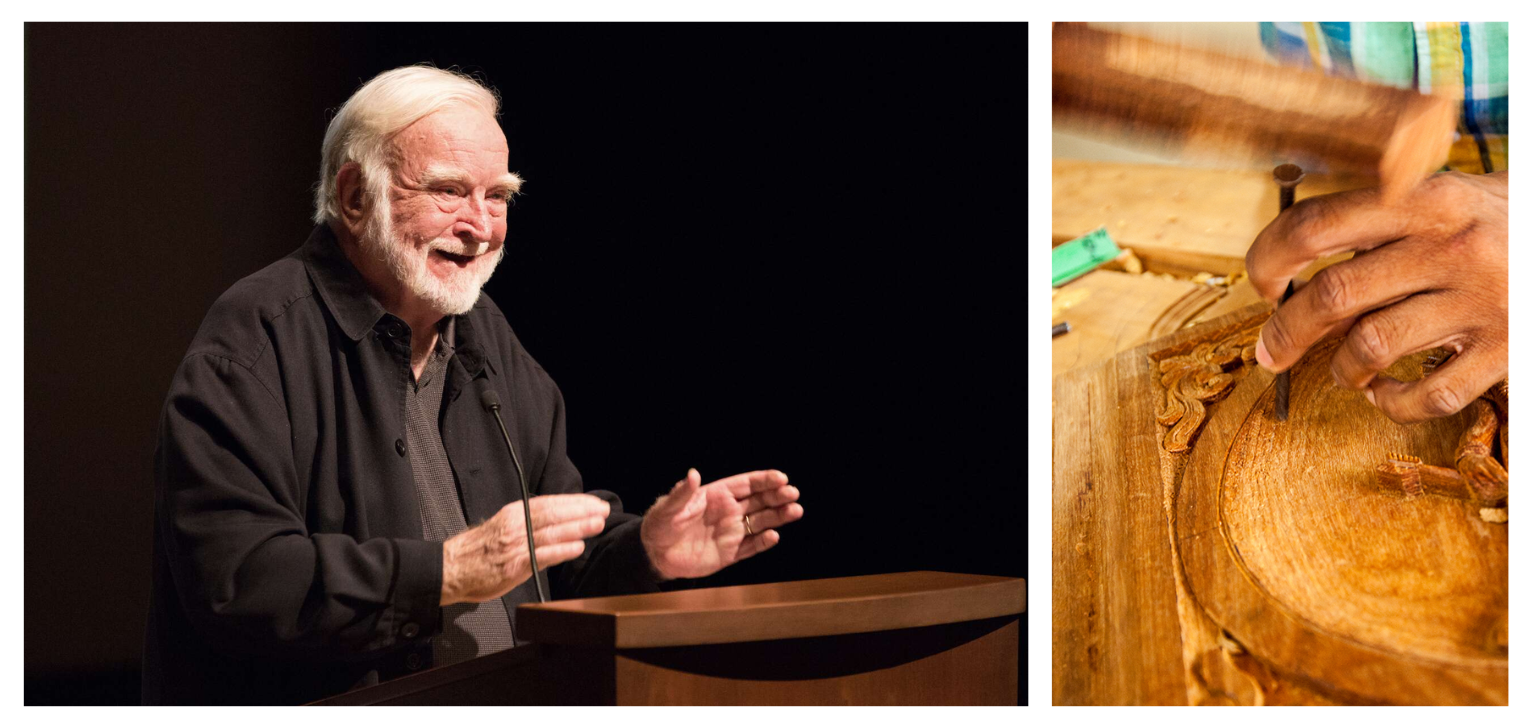
Interestingly, Csikszentmihalyi found that flow rarely emerges from passive consumption. It appears most often when there is a clear goal, immediate feedback, and a challenge that matches your skill level.
Which sounds remarkably like pottery, knitting, woodworking, or calligraphy—activities humans have practised for centuries.
Philosopher John Dewey noticed something similar long before neuroscientists began studying flow. In his landmark book Art as Experience, he argued that the value of art does not primarily lie in the finished object. It lies in the quality of attention demanded by the process. The experience itself becomes the reward.
A completed ceramic bowl is satisfying. But the deeper satisfaction often comes from the hour spent making it.
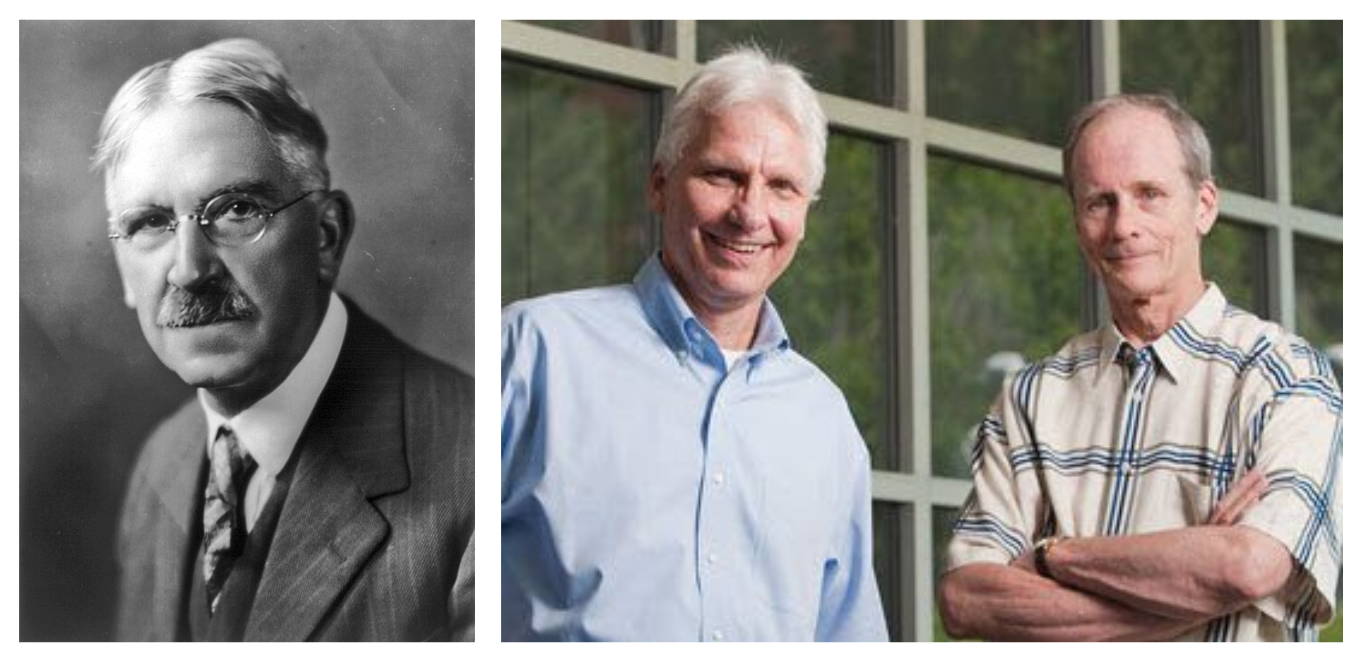
Modern motivation science offers another clue. Psychologists Richard Ryan and Edward Deci, creators of Self-Determination Theory, found that humans thrive when three psychological needs are met: autonomy, the feeling that we choose what we're doing; competence, the feeling that we're improving; and relatedness, the feeling that we're connected to something larger than ourselves.
Crafts satisfy all three almost effortlessly. You choose the project. You learn through practice. And you become part of a tradition of makers stretching across generations. Perhaps this is why creating often feels meaningful in a way that passive entertainment rarely does.
Then there is the work of psychologist James J. Gibson, who introduced a beautiful concept called affordances. His idea was that objects aren't passive; they invite action. A chair invites sitting. A door handle invites pulling. Clay invites shaping. Wood invites carving. Thread invites weaving.

In other words, making is not simply something we do to a material. It's a conversation with it. The material guides us as much as we guide the material.
Which brings us back to Patanjali.
Today, mindfulness is often portrayed as something we must schedule, something we practise, and something we remember to do. But ancient traditions understood something slightly different. Sometimes attention isn't cultivated by withdrawing from the world. Sometimes it's cultivated by engaging with it completely.
Perhaps that is why a potter can spend three hours at a wheel without checking their phone. Why a knitter can lose themselves in repetition. Why a woodworker can forget what time it is. They are not escaping attention. They are immersed in it.
And perhaps that is the deeper relationship between mindfulness and flow. Mindfulness teaches us how to return to the present. Flow gives us a reason to stay there. And long before we had a name for either, makers were quietly practising both.
Follow HobbyMela on Instagram and Linkedin
Subscribe on https://www.youtube.com/@hobbymela
Read more at hobbymela.com