
4 min read
If India Were Mapped By Craft Instead Of States
What if India were mapped not by states, but by its crafts? From the secret Aranmula Mirror to Rogan Art, Dhokra, and Pattachitra, discover how thousands of handmade traditions reveal a richer map of India—one shaped by makers, materials, and centuries of creativity.
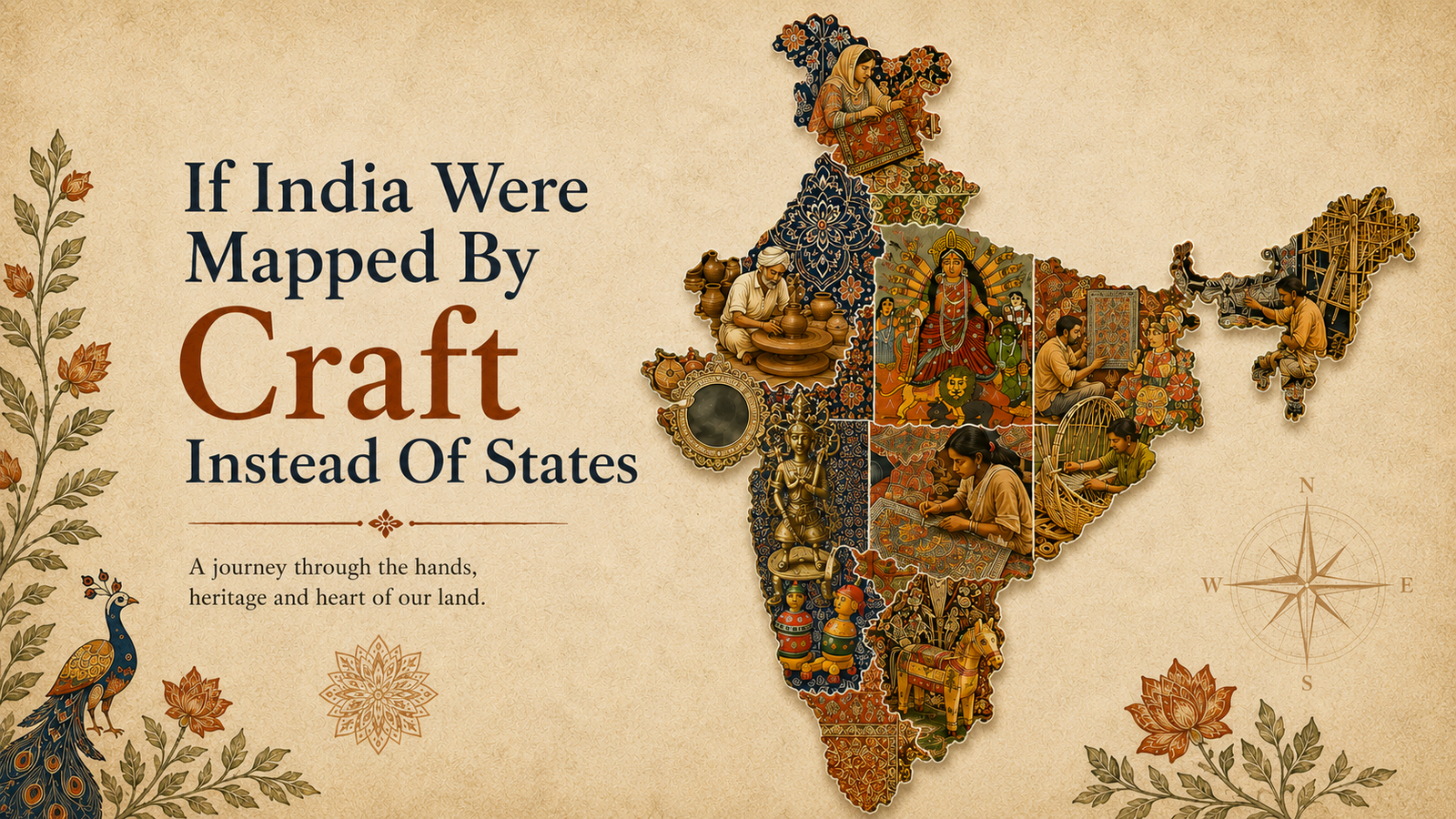
Most maps of India show borders, states, capitals, and highways. They tell us where places begin and end, but they reveal very little about the people who have shaped them. But what if we mapped India not by political boundaries, but by what it creates? Suddenly, the country would look completely different. It would no longer appear as a collection of states, but as hundreds of interconnected craft civilizations, a land where every few hundred kilometres the language of creativity changes, and every region tells its own story through the hands of its makers.
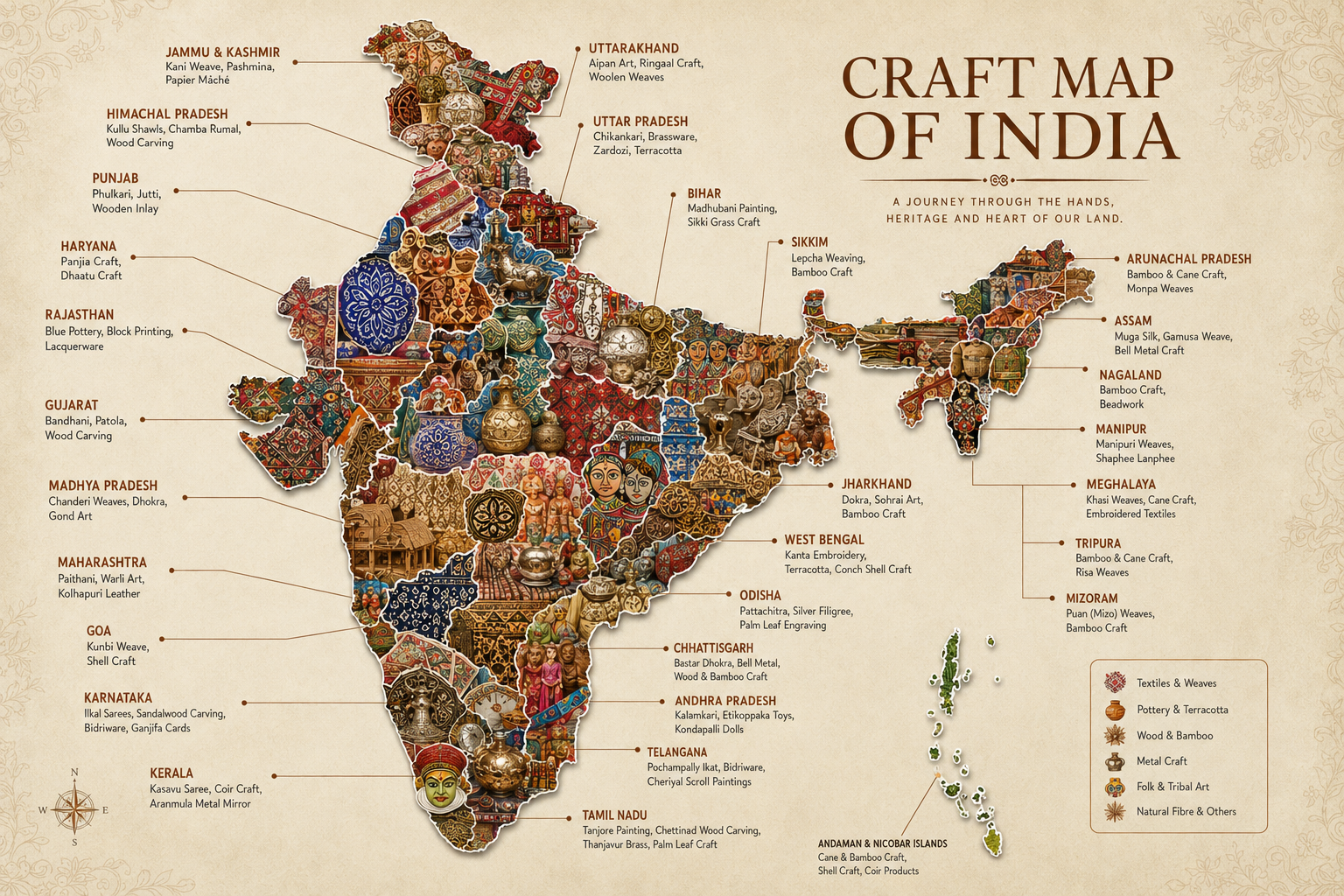
This remarkable perspective comes alive in Jaya Jaitly's Crafts Atlas of India, a monumental work that took more than a decade to document the country's extraordinary craft heritage. As you turn its pages, one realization becomes impossible to ignore: India is not home to a single craft tradition. It is home to thousands of them. Some are celebrated across the world, while others continue to thrive quietly within the villages and communities that have preserved them for generations.
In the temple towns of Mathura and Vrindavan, artisans practise Sanjhi, an intricate paper-cutting tradition used to create devotional scenes depicting the life of Lord Krishna. Each composition is painstakingly cut by hand with astonishing precision, only to become part of a ritual before disappearing, a reminder that some of the world's greatest works of art were never meant to last forever.
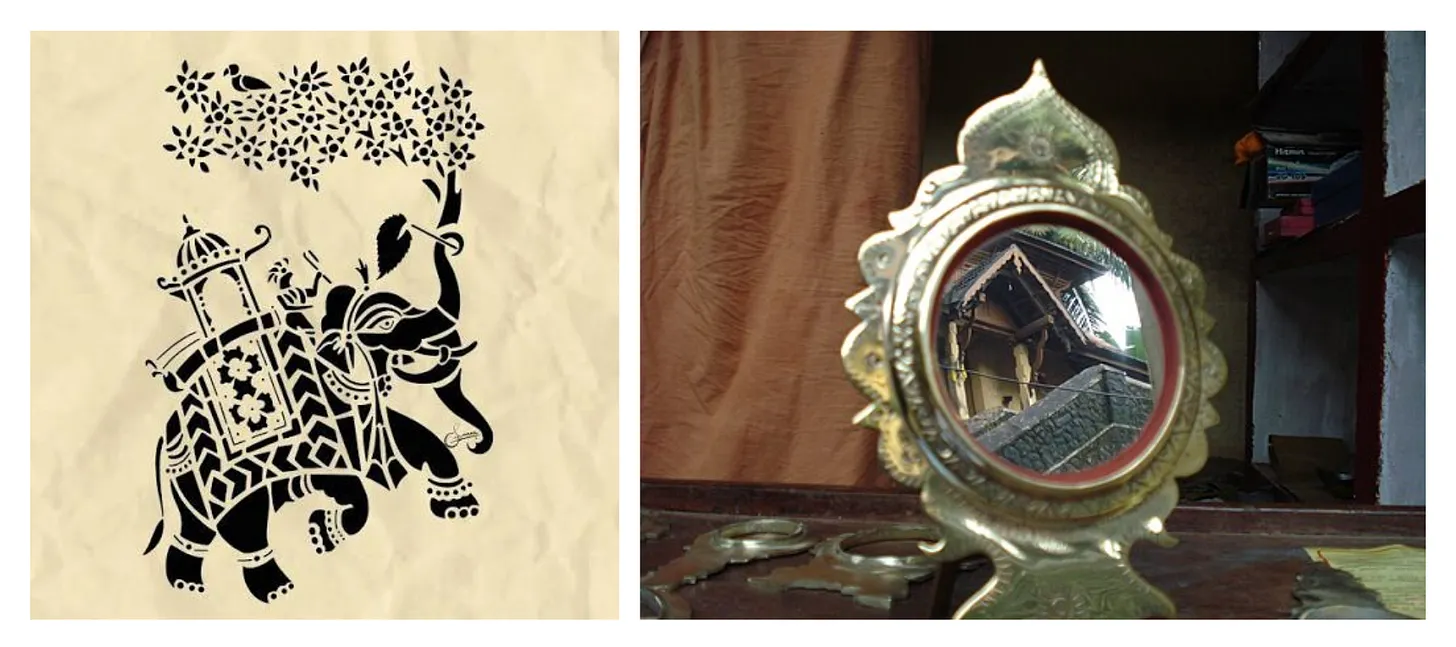
Travel south to Aranmula in Kerala, and you'll discover one of the rarest objects ever created by human hands: the Aranmula Mirror. Unlike ordinary mirrors made from glass, these remarkable objects are crafted entirely from a secret metal alloy that has been passed down through only a handful of families for centuries. Even today, the exact composition remains one of India's most carefully guarded craft traditions, making every mirror both an object of beauty and a living mystery.
In Swamimalai, Tamil Nadu, bronze casters continue to practise the ancient lost-wax casting technique that has been used for over a thousand years. Every sculpture begins with a wax model that is destroyed during the casting process, ensuring that no two works can ever be identical. Each finished sculpture exists as a one-of-a-kind creation, carrying within it centuries of inherited knowledge and craftsmanship.
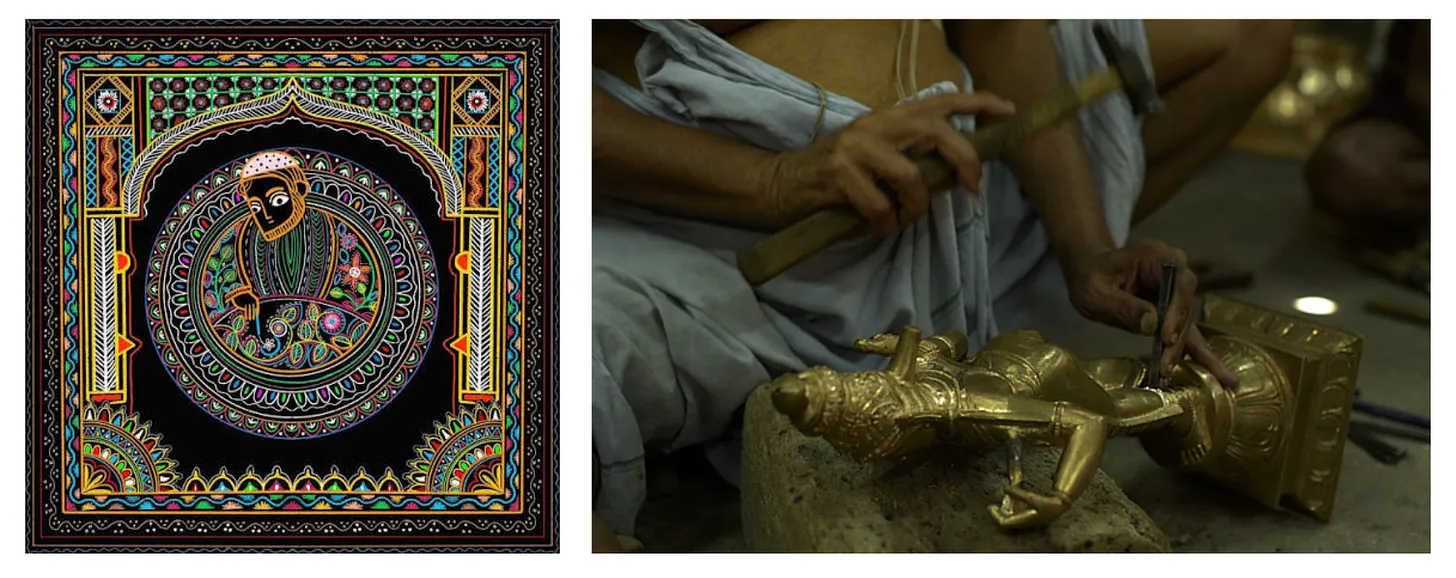
Journey west to the villages of Kutch, and you'll encounter the extraordinary world of Rogan Art, where paint made from castor oil is stretched into delicate threads and guided across fabric using a slender metal stylus without the artist ever touching the cloth itself. At one point in history, this extraordinary tradition survived within just a single family. Today, it stands as one of India's most distinctive and fragile art forms.
Deep within the forests of Bastar, Chhattisgarh, tribal communities continue to create Dhokra metalwork, a craft believed to be over four thousand years old. Using the same lost-wax process employed during the Indus Valley Civilization, artisans transform beeswax, clay, and molten metal into sculptures that connect the present with one of humanity's oldest artistic traditions.
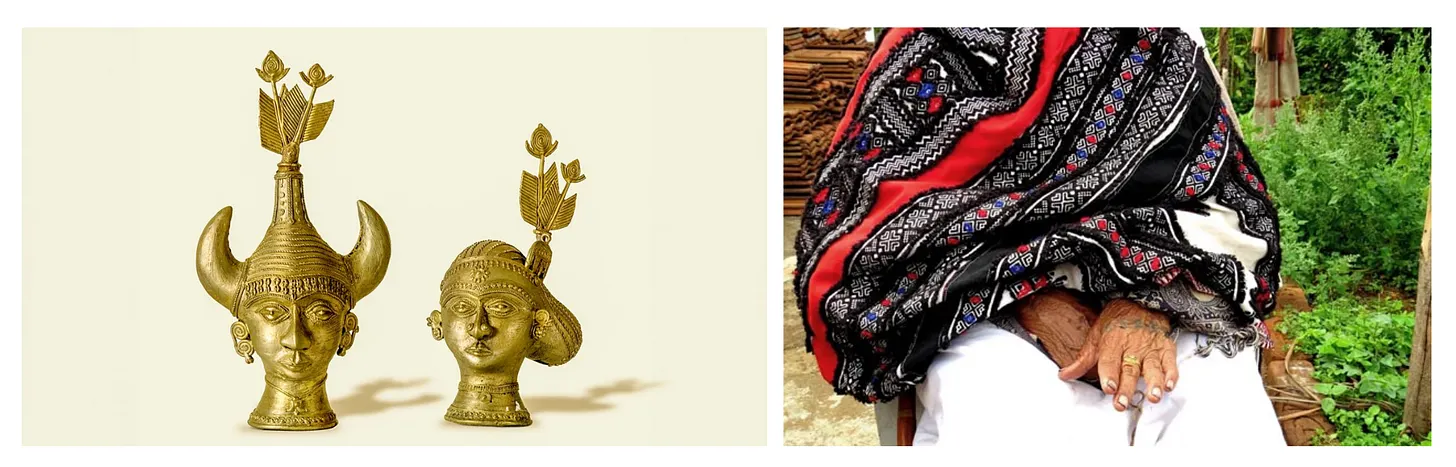
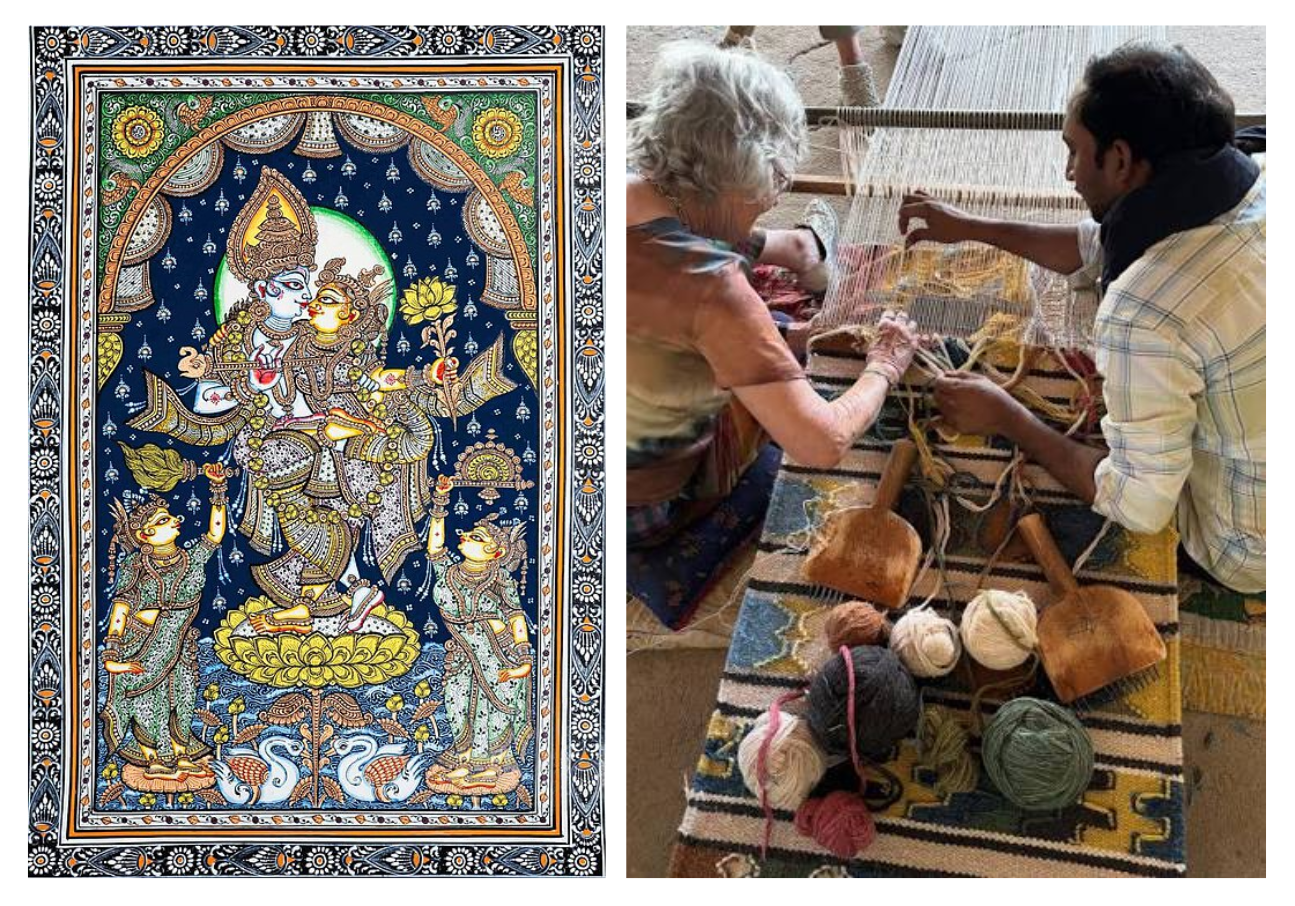
Yet some of India's most remarkable crafts remain almost entirely unknown outside their own regions. The Toda tribe of the Nilgiri Hills creates embroidery so precise that the reverse side of the fabric is considered just as beautiful as the front. In Gujarat, artisans practise Kharad weaving, operating handlooms with their feet to produce dense woollen floor coverings once prized by pastoral communities. Across Odisha, generations of artists continue to paint Pattachitra, intricate cloth paintings that served as portable storytelling traditions long before books, cinema, or television existed.
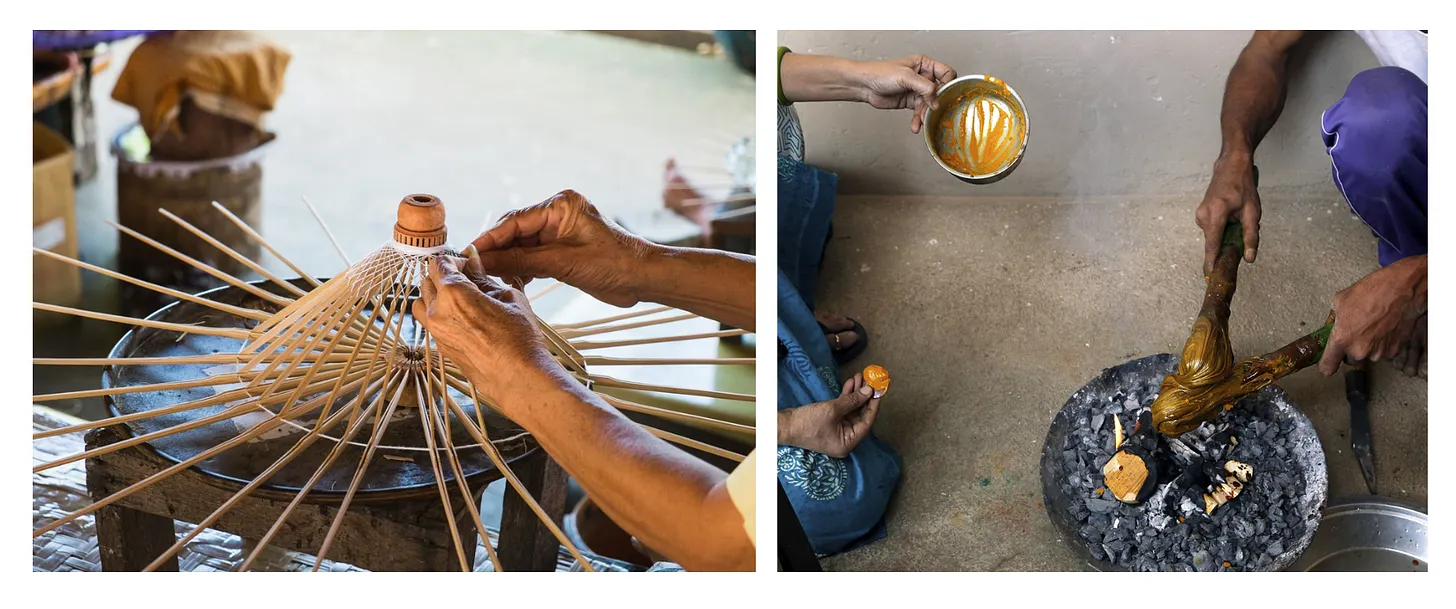
Further south, in the forests of Karnataka, the artisans of Channapatna transform locally sourced wood into vibrant lacquered toys using techniques introduced centuries ago through cultural exchanges with Persia. Meanwhile, across the mountains and valleys of India's Northeast, generations of craftspeople have mastered the art of working with bamboo and cane, transforming one of nature's simplest materials into architecture, baskets, furniture, textiles, musical instruments, and tools that remain central to everyday life.
What makes these traditions truly extraordinary is that none of them emerged by accident. Every craft was shaped by the landscape that surrounded it, the materials available to its people, the beliefs they held, the kingdoms they lived under, the trade routes they travelled, and the creative challenges they solved over generations. As Jaya Jaitly's Crafts Atlas of India beautifully demonstrates, a craft map is far more than a catalogue of handmade objects. It is a map of how India itself evolved.
Most maps tell us where India is.
A craft map tells us how India became India.
Not through borders or politics, but through thousands of makers, thousands of stories, and thousands of traditions quietly passed from one generation to the next. Long before roads, railways, and the internet connected this country, India was already united by something far more enduring—the hands of its makers.
Follow HobbyMela on Instagram and Linkedin
Subscribe on https://www.youtube.com/@hobbymela
Read more at hobbymela.com